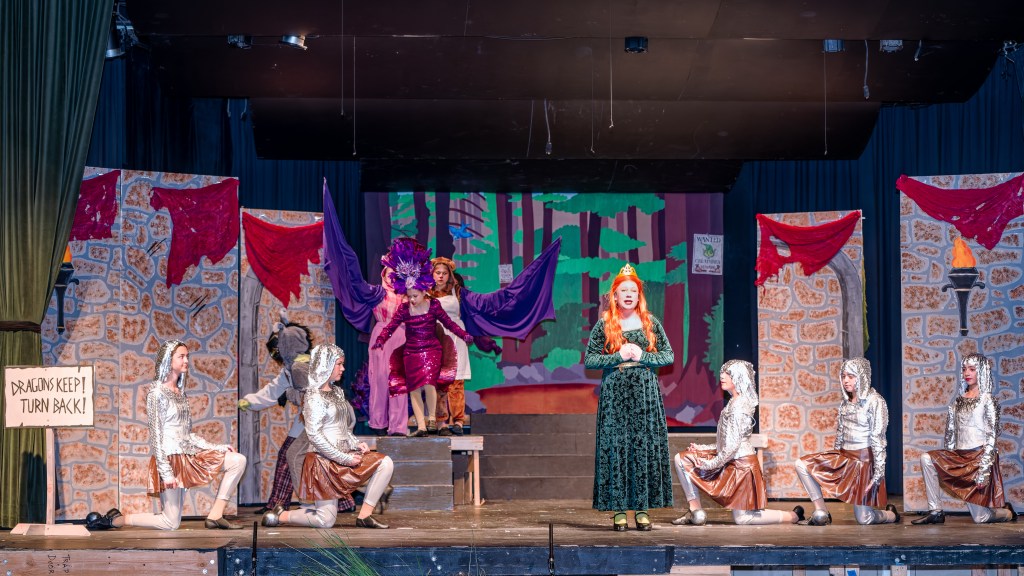
You are putting on a show with multiple scenic locations, but you have a small stage and very little room for bulky scenery in the wings. Scene changes need to happen quickly and smoothly, often with student crews and limited rehearsal time. What do you do?
Enter the periaktos.
A periaktos is a three-sided scenic structure mounted on casters that can be rotated to reveal different scenery on each side. A group of them is called periaktoi. While the name may be unfamiliar, these structures have been used in theater for centuries and remain one of the most useful scenic tools for school musicals.
Periaktoi are relatively compact compared to traditional flats or large rolling scenery. Typical dimensions are about three feet wide on each side and eight feet tall, though they can certainly be built in other sizes. They can stay anchored in one location and simply rotate during scene changes, or they can be rolled around the stage as needed. A small row of periaktoi can quickly create an entire scenic backdrop for a production while taking up far less backstage space than many traditional set pieces.
Why Periaktoi Work So Well for School Theater
One of the biggest challenges in school and youth theater is balancing visual storytelling with practical limitations. Most schools have:
- limited storage
- small stages
- minimal wing space
- volunteer crews
- student stagehands
- limited build budgets
Periaktoi solve many of these problems surprisingly well.
Because each structure has three usable sides, a small number of units can represent many different scenic locations. They also allow scene changes to happen quickly and cleanly, which helps maintain the pace and energy of the show.
Another major advantage is reusability. The structures themselves are durable and can last through many productions with repainting and modification.
Basic Ways to Use Periaktoi
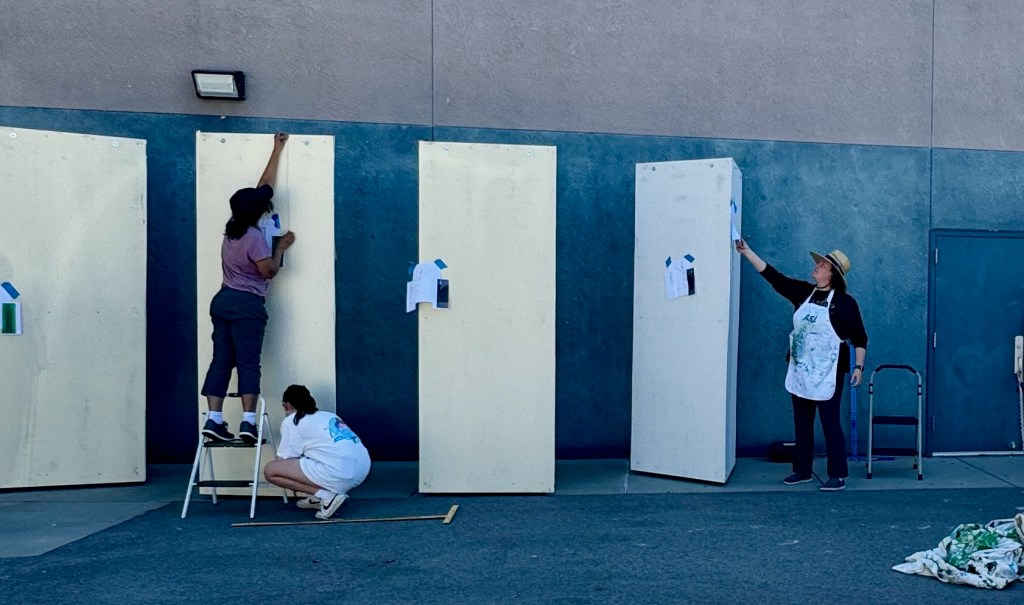
The simplest approach is to cover each side with thin plywood or luan and paint scenery directly onto the panels. This works well if your show only requires a few locations.
If additional locations are needed, some productions add hinged panels or fold-out elements that reveal additional scenery. However, this should be done carefully. Anything that folds outward away from the center of the structure can create balance and safety issues if the weight is not distributed thoughtfully. Periaktoi can become surprisingly heavy, especially once lumber, plywood, and casters are added.
My Favorite Method: Magnets and Lightweight Scenic Dressing
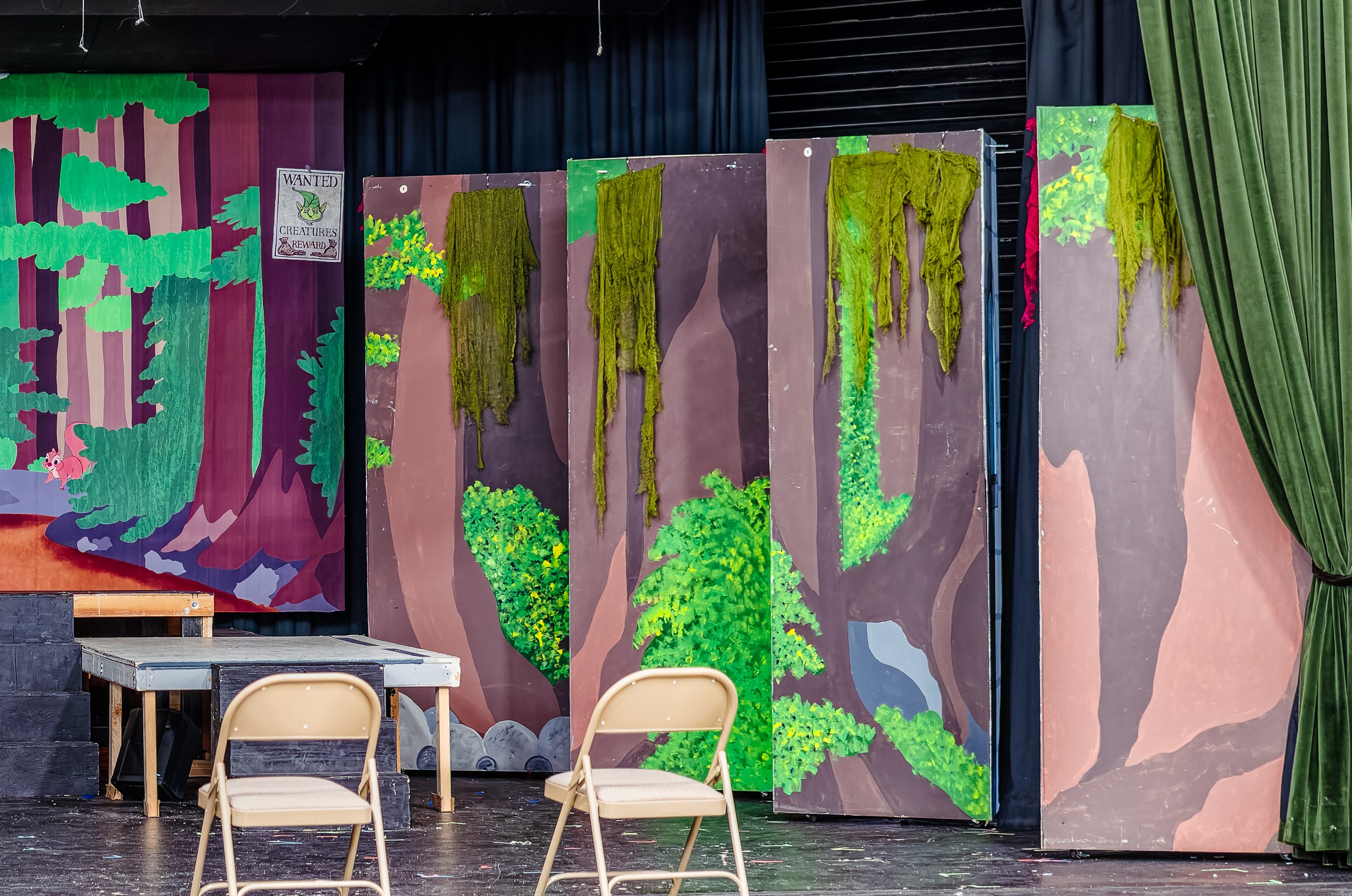
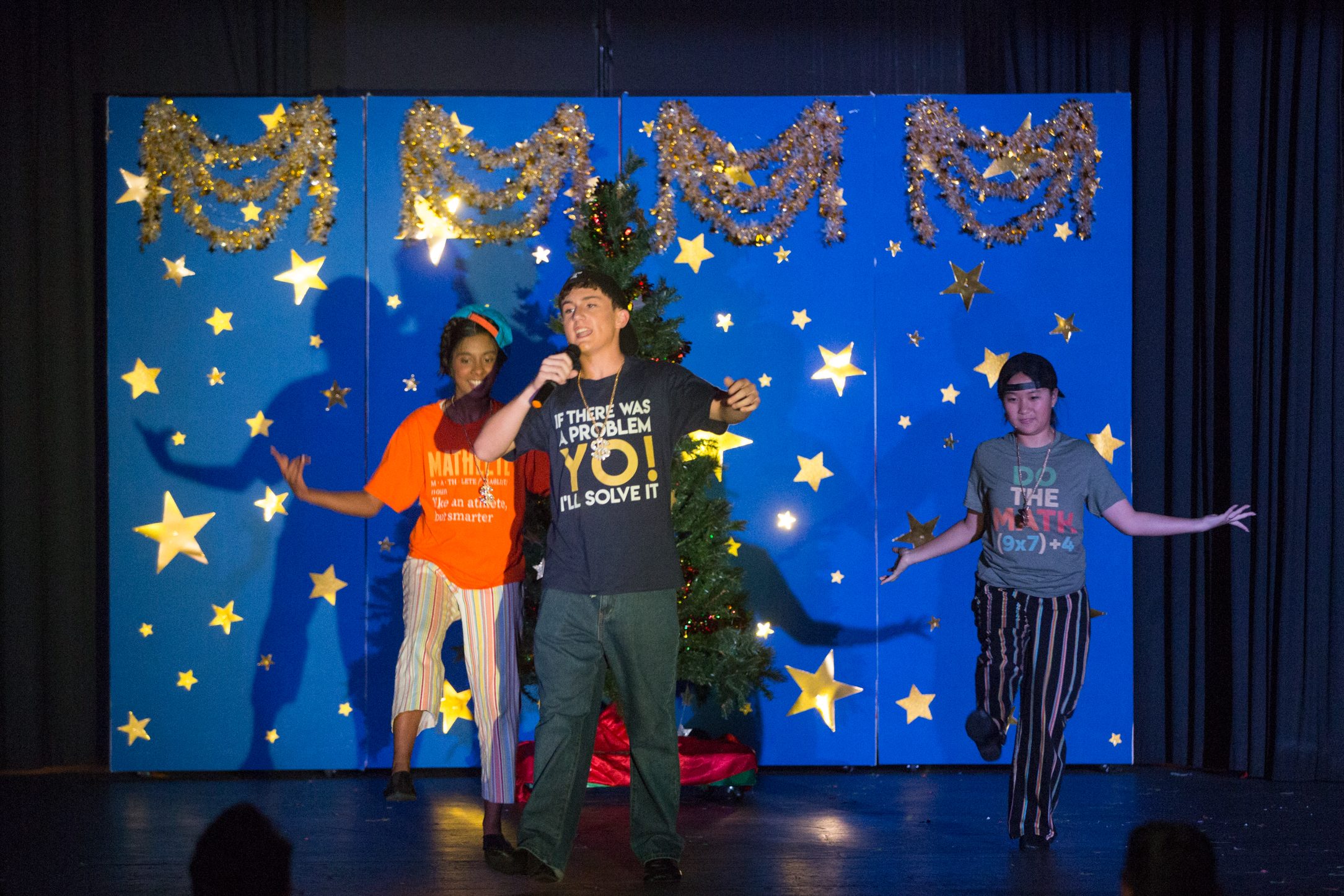
Over time, I have found that my favorite way to use periaktoi is to keep the main structures relatively neutral and use magnets to attach lightweight scenic elements.
Posters, artwork, signs, banners, and other decorative pieces can all be swapped out quickly to transform the setting. I have also added hardware that allows me to hang lightweight three-dimensional scenic elements such as fabric “moss” or decorative garlands. This creates more visual depth without requiring large set pieces.
This approach works especially well for school theater because:
- scenic pieces can be changed quickly
- students can learn the system easily
- storage becomes simpler
- damaged elements can be replaced individually
- the same structures can support many different shows
For one production of The Wizard of Oz, we needed to create nine scenic locations using a small number of periaktoi. Three locations were painted directly onto the structures, while the additional scenes used large painted cardboard panels that hung from bolts attached to the top edges of the periaktoi.
At the time, it seemed like a clever solution. In practice, however, the cardboard panels wore out quickly. They bent and warped with repeated use, rarely laid flat, and the mounting holes deformed over time despite being reinforced with metal grommets. Swapping them in and out was also awkward for students during fast scene changes.
I would not use that system again.
Magnets have proven to be far more reliable, flexible, and user-friendly.
The Magnet System I Use
I typically use flat circular rare-earth magnets with a center hole so they can be attached directly to the panels with screws. I then paint the magnets to match the scenery so they visually disappear into the set.
The scenic elements themselves have large metal washers attached to the back so they can quickly connect to the magnets.
It is important to keep these scenic pieces lightweight. Posters, paper artwork, lightweight foam pieces, and thin decorative elements work very well. Heavy objects should be avoided unless the structure has been specifically engineered to support them safely.
One practical consideration is height. If scenic attachment points are placed too high on the structure, students or shorter adults may struggle to swap pieces during transitions without a step stool. Designing for accessibility and ease of use is just as important as designing for appearance.
Storage and Practical Considerations
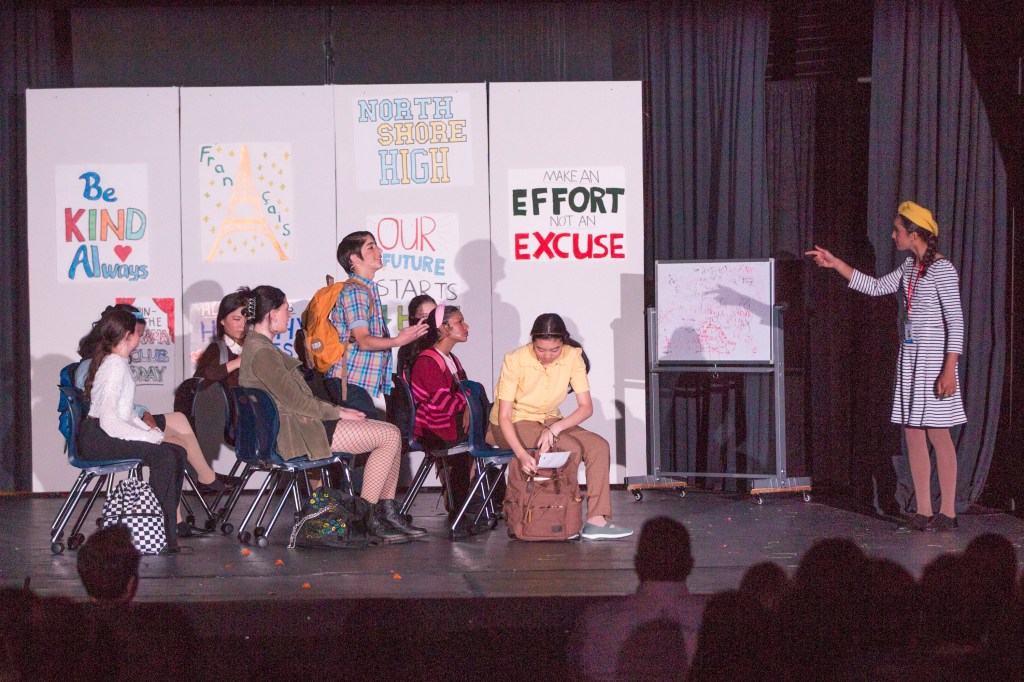
Periaktoi are durable and store more efficiently than many large scenic pieces because their triangular shapes fit together relatively neatly. Four units can create an excellent modular backdrop system, and I also like using smaller groupings downstage left and right to help frame the stage.
That said, they do have drawbacks.
At roughly eight feet tall plus casters, most full-sized periaktoi will not fit through standard doorways. They are also fairly heavy because they are usually constructed from lumber and plywood. Storage planning is extremely important before building them.
I personally store mine along the back wall of the stage between productions. Schools with limited storage may want to build smaller versions or reduce the overall height and width.
Final Thoughts
Periaktoi are one of my favorite scenic tools because they strike an excellent balance between flexibility, efficiency, and practicality. They allow schools to create multiple scenic environments without filling the wings with bulky scenery or requiring complicated scene changes.
Like many scenic systems, they work best when designed thoughtfully and kept simple. Over the years, I have found that lightweight scenic dressing and magnetic systems create far more durable and student-friendly results than overly complicated moving pieces.
For school theater, practical scenery is often the scenery that works best.


Leave a Reply